
Learn
Matcha vs Green Tea
MIDORIVA · 24 September 2026
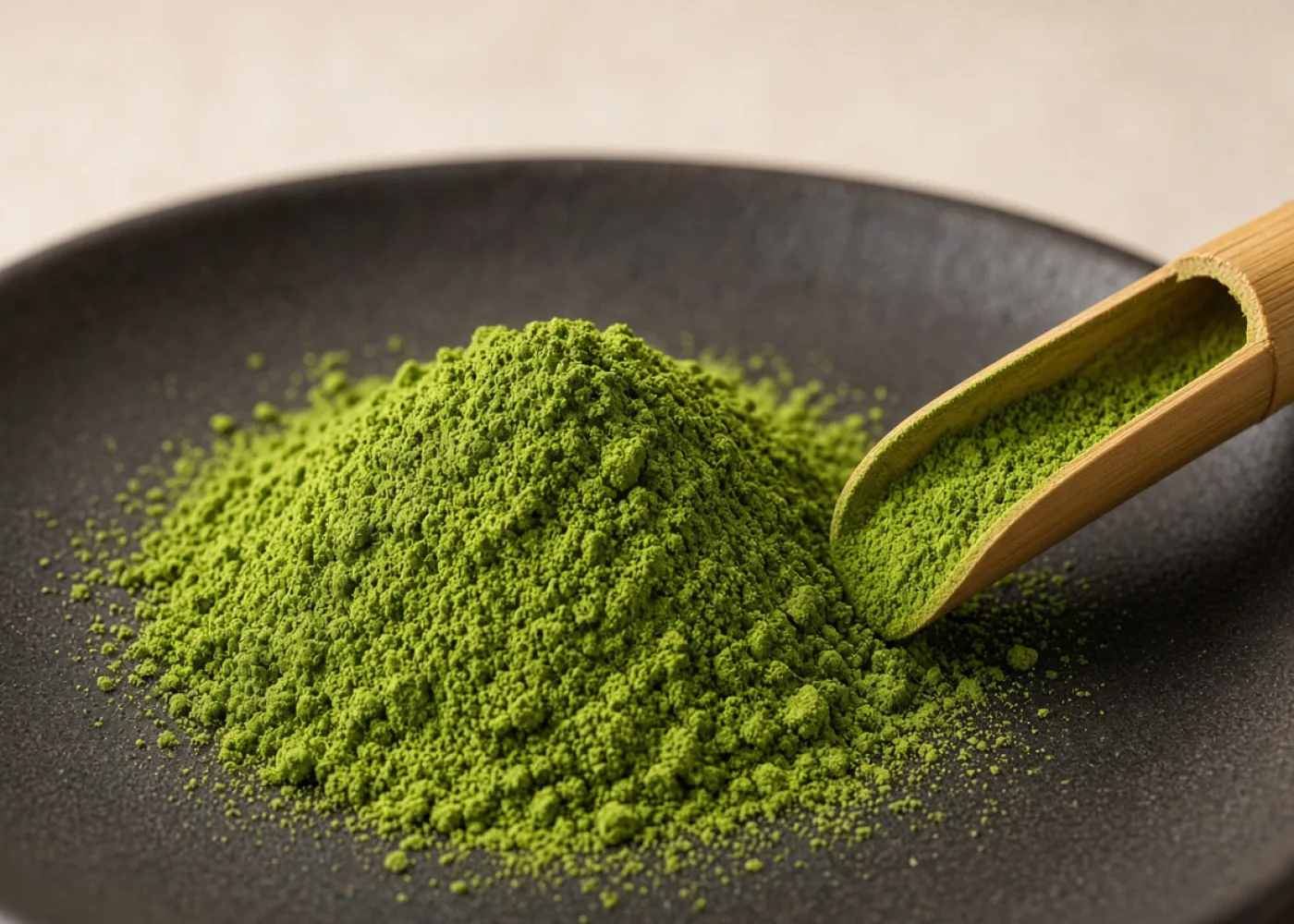
Matcha and the green tea in a teapot both come from the tea plant, Camellia sinensis. The difference is what happens to the leaf before it reaches the cup, and whether the leaf stays in the drink.
Infusion or suspension
Steeped green tea is an infusion. Hot water pulls flavour, colour and soluble compounds out of the leaf, then the leaf is discarded. Matcha is the leaf ground to powder and mixed through the water. You consume the leaf itself, not only what water extracted from it.
That is why a small amount of matcha can taste more intense than a large mug of lightly steeped green tea. It is also why the drink is cloudy. Cloudiness is expected. A clear matcha usually means there was very little powder in the cup.
Preparation
Steeped tea wants a pot or an infuser, a measured steep, and leaves removed before the cup turns harsh. Matcha wants a whisk and a short mix. There is no long steep, because nothing is being removed. Leave it standing, though, and the powder sinks. A second whisk brings it back.
Taste and caffeine
Matcha is often described as grassy, savoury and more full than a pale sencha or a supermarket tea bag. Bitterness depends on the powder, the amount used, and the water temperature. Steeped green tea can be sweet and marine, or toasty, depending on the leaf and the brew.
Both contain caffeine, because caffeine is naturally present in tea. A matcha cup can contain more caffeine than a lightly steeped cup simply because more leaf is in the drink, but the amount moves with the scoop. This site does not publish a caffeine figure for MIDORIVA until one is supplied, and it does not claim that either drink improves health, focus or energy.
Choose on taste and on the kind of cup you want to make. If you want a bowl you whisk, use matcha. If you want a pot you can refill, use leaf tea. MIDORIVA sells the powder, in a 100g pouch.