
Learn
What Is Matcha?
MIDORIVA · 24 September 2026
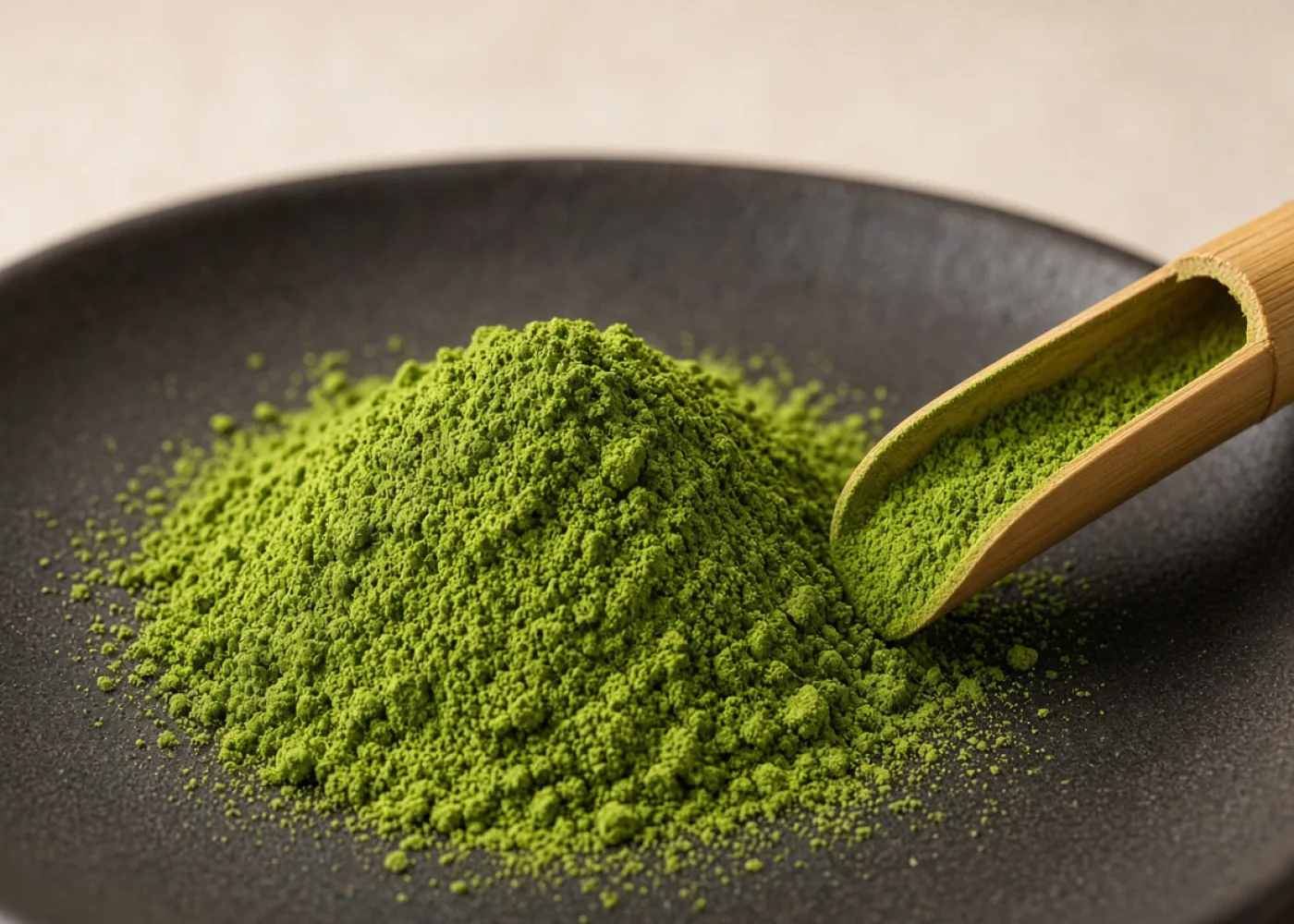
Matcha is green tea that has been ground into a fine powder. You mix the powder into water, or into milk, and drink it with the leaf still in the cup. A tea bag or a loose-leaf brew is different: the leaves are steeped, then taken out, and you drink the infusion.
The leaf stays in the cup
Because the powder is suspended in the drink, the cup tastes stronger than a lightly steeped green tea made with the same kind of leaf. The texture is soft rather than clear. If the powder has not been sifted, or if it is stirred instead of whisked, you can get small lumps. That is a preparation issue, not a sign that the drink has failed.
The practice of whisking powdered tea is closely associated with Japanese tea culture. That is the history of the drink. It is not, by itself, a statement about where a particular company is based, or where a particular tin or pouch of powder was grown. MIDORIVA is a brand name. It does not mean the business is Japanese, and it does not mean the tea is from Japan.
What “ceremonial grade” means
Ceremonial grade is a trade description used across the matcha market. It usually signals powder sold for drinking with water, rather than powder sold mainly for cooking or for covering with sugar. It is not a single grade defined by UK food law. Two products can both say ceremonial grade and still taste different, because the leaf, the finish and the freshness are not standardised by that phrase.
MIDORIVA Ceremonial Grade Matcha is sold as a 100g white resealable pouch. The pouch is not printed. A dark green sticker on the front carries the name. Ingredient, nutrition and origin details are published on the product page only once they have been checked against the finished label.
How people drink it
The two everyday approaches are straightforward. Whisk the powder with hot water for a traditional-style cup, or mix it into milk for a matcha latte. Both use the same powder. Neither requires specialist equipment, though a bamboo whisk and a wide bowl make the traditional cup easier.
For one cup of MIDORIVA, the published method is 2 g of powder, about 1 level teaspoon, with 70 ml of water at 75°C. Bitterness usually comes from too much powder, water that is boiling, or powder that has been left open to air and light. The how to make matcha guide sets out the steps.