
Learn
What Does Matcha Taste Like?
MIDORIVA · 24 September 2026
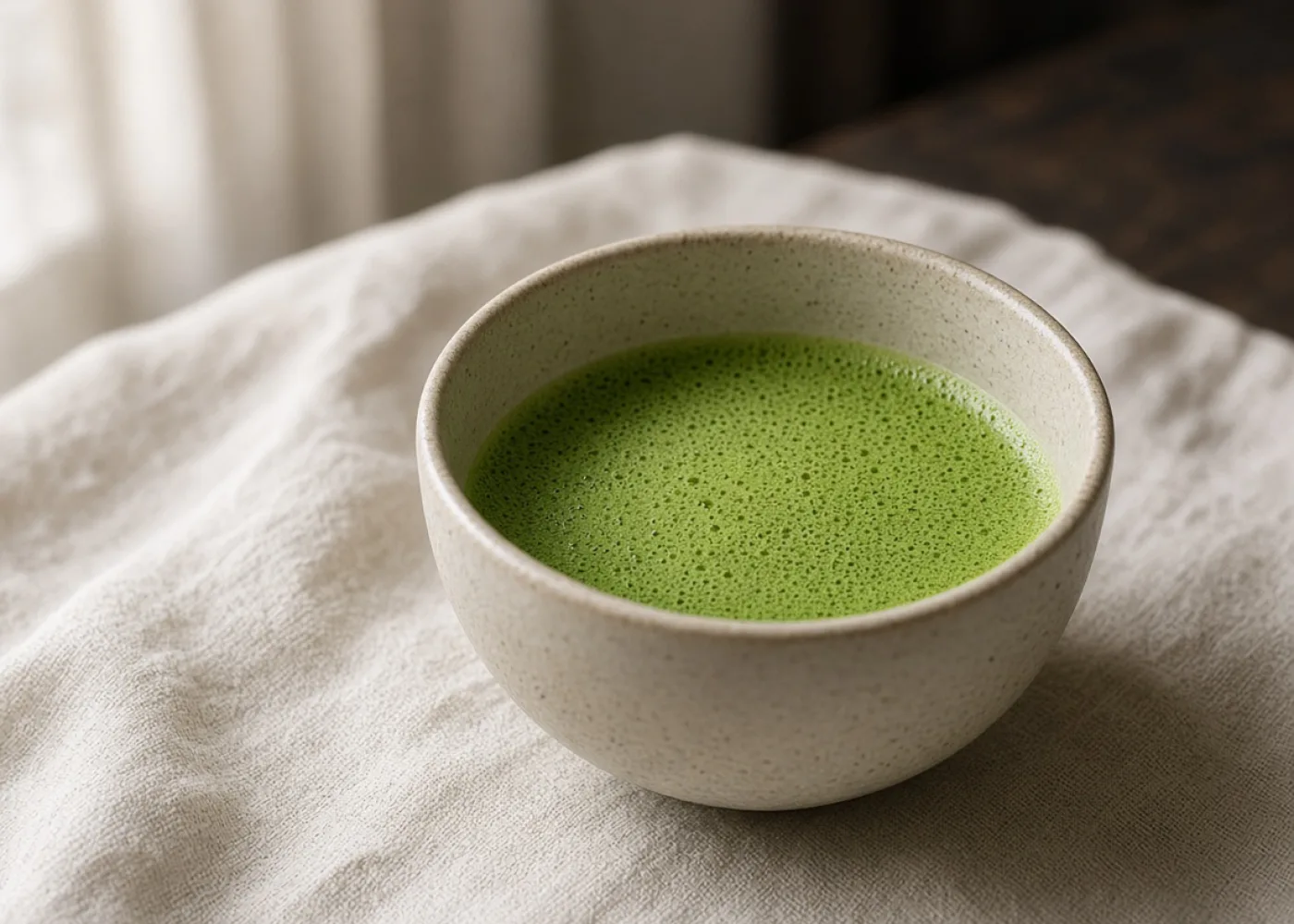
Fresh matcha is often described as green, grassy and savoury, with a sweetness behind the bitterness. The savoury side is the umami people talk about: a broth-like roundness, not a meaty flavour. A good cup is not a spoonful of green-tea-flavoured sugar. If you have only had a sweet café latte, a plain whisked bowl will taste cleaner and more serious.
What changes the cup
The same powder can taste different from one kitchen to the next. More powder tastes stronger and more bitter. Water at a rolling boil pulls out more harshness than water that has cooled for a few minutes. A powder that has sat open in the light tastes flatter and drier than one that was sealed.
Lumps do not add flavour. They are dry powder that has not mixed. Sift, then whisk. If the drink tastes of nothing much, there probably was not enough powder in the bowl.
Ceremonial grade is not a flavour guarantee
Powders sold as ceremonial grade are often intended to be drunk on their own, so producers expect them to taste acceptable without milk or sugar. That is a market convention, not a legal standard, and it does not tell you the exact flavour of a pouch you have not opened. MIDORIVA does not publish a tasting note for its matcha until one has actually been written from the product. This page will not invent vanilla, chocolate, or “notes of spinach” for it.
Latte versus bowl
Milk softens the same powder. A latte tastes rounder and less bitter, and the tea flavour sits further back. An unsweetened latte is still recognisably matcha. A heavily sweetened one tastes mostly of the syrup. If you want to know what the powder itself is like, whisk one cup with water before you decide how you like it in milk.